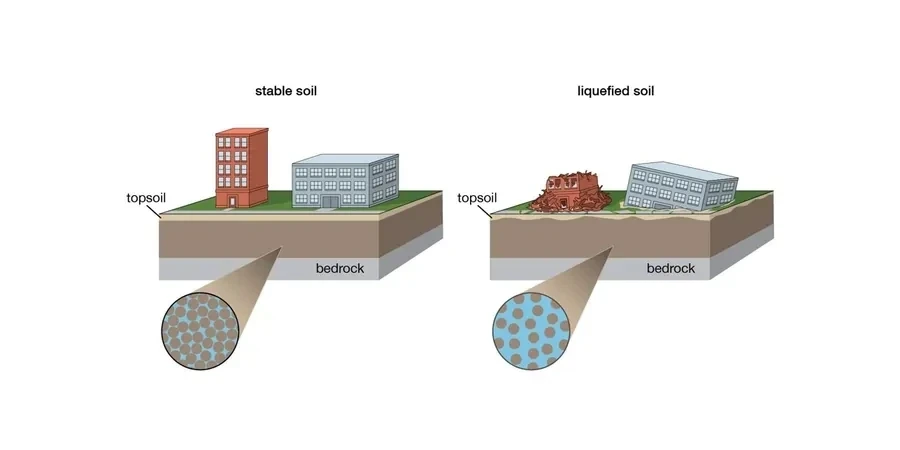
Seismic engineering in San Bernardino represents a critical discipline addressing the region's elevated earthquake risk, encompassing everything from foundation design through advanced ground motion assessment. This category covers the analytical frameworks, field investigations, and design strategies required to safeguard structures against the dynamic forces generated by seismic events. Given the city's position within one of California's most seismically active corridors, understanding how local soils amplify or attenuate shaking—and how structures interact with that modified motion—becomes essential for engineers, developers, and public agencies alike. Services such as soil liquefaction analysis and site response analysis form the backbone of this practice, providing the data necessary to make informed design decisions that protect both life and property.
The geological setting of San Bernardino directly shapes its seismic vulnerability. The city sits near the junction of the San Andreas and San Jacinto fault systems, two of the most active strike-slip faults in North America, both capable of generating large-magnitude events. Beneath much of the urbanized area, Quaternary alluvial deposits from the Santa Ana River and Lytle Creek watersheds create deep sedimentary basins that can trap and amplify seismic waves. These unconsolidated materials—ranging from loose sands to silty clays—pose specific challenges: they may experience strength loss during shaking, settle differentially, or in the case of saturated granular soils, undergo liquefaction. The water table across portions of the valley remains relatively shallow, further elevating liquefaction susceptibility in areas underlain by Holocene-age channel deposits. This combination of proximity to major faults and problematic subsurface conditions makes rigorous seismic investigation non-negotiable for any substantial construction project.
Regulatory compliance in San Bernardino is governed primarily by the California Building Code (CBC), which adopts and amends the International Building Code for state-specific seismic requirements. Chapter 16 of the CBC mandates seismic design categories based on site class and mapped spectral accelerations, directly referencing ASCE 7 standards for ground motion parameters and analysis procedures. For sites with liquefaction potential, the code requires mitigation measures or foundation designs that account for loss of bearing capacity and lateral spreading. The City of San Bernardino Building and Safety Division enforces these provisions through plan review, often requiring site-specific geotechnical reports that include both field exploration and advanced analyses. California Geological Survey Special Publication 117 provides guidelines for evaluating and mitigating seismic hazards, serving as a companion document to the regulatory framework. Projects falling under the jurisdiction of the Division of the State Architect or the Office of Statewide Health Planning and Development face additional scrutiny, particularly for essential facilities like hospitals and emergency response centers.
The types of projects requiring comprehensive seismic services span a wide spectrum. High-occupancy structures—schools, healthcare facilities, civic centers, and emergency command posts—demand the most rigorous analyses due to their importance factors and post-earthquake functionality requirements. Mid-rise and high-rise buildings in downtown San Bernardino often necessitate nonlinear site response analyses to capture the full range of ground motion amplification through deep soil profiles. Infrastructure projects including bridges, overpasses, and utility corridors crossing liquefiable zones rely on soil liquefaction analysis to quantify settlement and lateral displacement risks. Even single-family residential developments on gently sloping terrain with saturated sandy soils may trigger the need for simplified screening procedures. Increasingly, seismic retrofit evaluations of existing unreinforced masonry and non-ductile concrete buildings drive demand for site response analysis to assess how updated hazard maps and soil conditions affect structural vulnerability. Industrial facilities with sensitive equipment or hazardous material storage also benefit from these specialized assessments to prevent cascading failures during strong shaking.
The primary hazards include strong ground shaking from nearby San Andreas and San Jacinto fault ruptures, soil liquefaction in saturated alluvial deposits with shallow groundwater, seismic settlement of loose granular fills, and lateral spreading along creek channels. Site amplification through deep sedimentary basins can significantly increase shaking intensity at the surface compared to bedrock reference motions, making site-specific analysis essential for accurate design.
A site-specific analysis becomes necessary when the default site coefficients in ASCE 7 do not adequately represent local conditions, typically for Site Class D or E profiles with significant depth to bedrock, sites near major active faults, or projects where performance-based design objectives exceed standard code minimums. The CBC allows such analyses to refine ground motion parameters, provided they follow the procedures outlined in Chapter 21 of ASCE 7.
Liquefaction analysis quantifies the depth and thickness of potentially liquefiable layers, estimates ground settlement and lateral displacement, and informs mitigation strategies such as ground improvement via stone columns, deep soil mixing, or compaction grouting. Foundation recommendations may shift from shallow spread footings to deep pile systems with adequate embedment below liquefiable zones, and structural slabs may require thickened sections or void forms to accommodate anticipated settlement.
Site response analysis models how seismic waves propagate upward through the soil column, capturing nonlinear soil behavior, impedance contrasts, and basin effects that amplify or de-amplify motion at specific frequencies. The output—site-specific response spectra and acceleration time histories—directly feeds structural dynamic analyses, influences base shear calculations, and helps identify potential resonance conditions where the site's natural period aligns with the building's fundamental period.