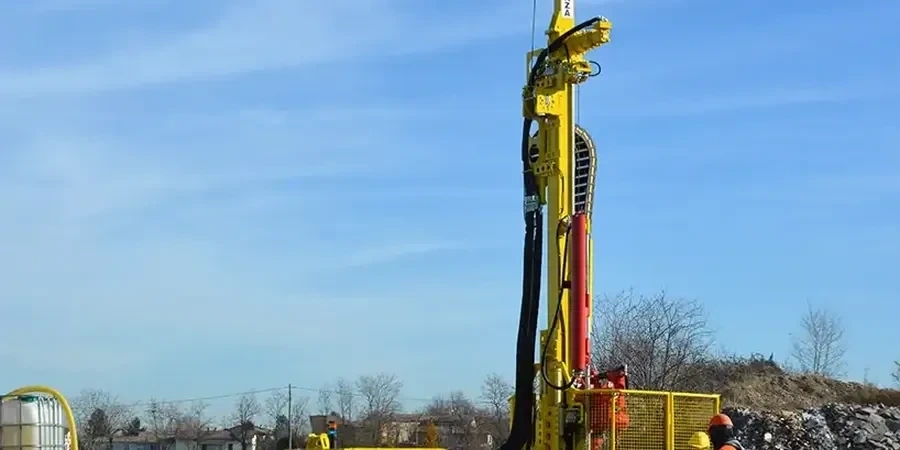
I remember a project near the 210 freeway where a 5-story apartment complex was being planned. The geotechnical report from the 1990s was thin, and the city required a new SPT investigation. We mobilized a CME 55 rig and drilled three borings to a depth of 80 feet. The blow counts in the upper 30 feet were surprisingly high, but below that we hit a loose sand layer that changed the foundation design entirely. That's the kind of real-world scenario where SPT in San Bernardino makes the difference between a safe building and a costly retrofit later. Before starting, we always recommend a complementary study of soil classification to correlate N-values with soil type, and a permeability field test when water tables are close to the surface.
Corrected N-values from SPT remain the industry standard for liquefaction triggering assessment in alluvial basins like San Bernardino.
Approach and scope
ASTM D1586 governs the SPT procedure, and in San Bernardino that standard is especially relevant because of the alluvial fan deposits from the San Bernardino Mountains. The test measures the number of blows required to drive a split-spoon sampler 12 inches, giving us the N-value. We take samples every 5 feet and log the soil visually before sending them to the lab. Key parameters we record include:
N-value corrected for overburden (N60)
Fines content for liquefaction screening (Youd-Idriss 2001)
Hammer energy efficiency (typically 60-70% with safety hammer)
Groundwater depth and casing blow counts
These data feed directly into IBC and ASCE 7 site class calculations. For deeper profiling we often combine SPT boreholes with a MASW survey to map Vs30 across the site.
Technical reference image — San Bernardino
Local ground factors
The rig itself is a CME 55 or similar truck-mounted drill, which needs stable access. In San Bernardino, many sites have uneven terrain from old debris flows or steep lots near the foothills. If the rig can't level properly, the SPT rod alignment is compromised and N-values become unreliable. We also watch for caving sands below the water table, which can jam the sampler or cause rod refusal. That's why we always run a casing advance ahead of the sampler when groundwater is encountered. Missing these conditions means the SPT won't capture the real soil strength, leading to overconservative or unsafe foundation designs. The risk isn't just technical; it's financial too.
Using the NCEER workshop methodology (Youd-Idriss, 2001), we combine SPT N60 values, fines content, and peak ground acceleration to map liquefaction risk. This is critical for sites near the San Andreas fault or along the Santa Ana River wash.
02
SPT with Split-Spoon Sampling for Lab Testing
Each spoon sample is logged in the field, bagged, and sent to our accredited lab for moisture content, Atterberg limits, and grain size distribution. The result is a complete geotechnical profile without needing a second mobilization.
Standards used
ASTM D1586-18 (Standard Test Method for SPT), AASHTO T-206 (SPT equivalent), IBC 2021 Chapter 18 (Soil Investigations), ASCE 7-16 (Site Class from N60)
Quick answers
How much does an SPT test cost in San Bernardino?
The typical cost for a standard SPT boring with continuous sampling in San Bernardino ranges from US$610 to US$810 per borehole, depending on depth, access, and number of samples tested. This includes mobilization, drilling, field logging, and basic lab tests on recovered samples. Larger projects with multiple boreholes often receive volume pricing.
What is the difference between N-value and N60 in SPT?
The raw N-value is the blow count recorded in the field. N60 is the corrected value accounting for hammer energy efficiency, rod length, sampler type, and borehole diameter. For example, a safety hammer with 60% efficiency may give a raw N of 20, but N60 could be 18 or 22 depending on corrections. In San Bernardino, we always report N60 because it standardizes results across different rigs and hammers.
How deep should SPT borings be for a 3-story building in San Bernardino?
For a 3-story structure with shallow foundations, we typically drill at least one boring to a depth of 40 to 50 feet, or until we encounter competent bearing strata with N60 above 30. The IBC recommends exploring to a depth where stress increase from the foundation is less than 10% of the existing overburden. Given San Bernardino's alluvial soils, deeper borings may be needed if liquefiable layers are suspected.
Can SPT data be used for seismic site classification?
Yes, absolutely. The average N60 in the top 100 feet is used by ASCE 7 to assign a Site Class (A through F). In San Bernardino, most sites fall into Site Class D (stiff soil) or C (very dense soil/soft rock). We also cross-check with Vs30 from MASW when available. The SPT-based method is widely accepted by local building departments and is the most cost-effective way to meet code requirements.